
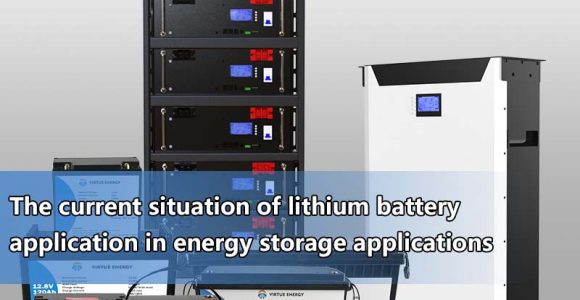
Lithium battery play an extremely important role in UPS, transportation, electronic communications and other applications, and have a wide range of application prospects. Compared with lithium-ion battery, lithium iron phosphate battery has obvious advantages in lifespan, safety, response speed, cost and other aspects, more suitable for energy storage market. As a senior LiFePO4 battery manufacturer in China, we mainly provide drop-in replacement battery, rack mounted battery, power-wall battery and so on to meet your application needs.
The main characteristics of lithium battery are high safety, low cost and long service life. These advantages make lithium battery play an increasingly significant role in the field of energy storage. The applications of lithium battery in the energy storage field are roughly as follows:
Residential Energy Storage
The continuous rise in energy costs and electricity prices in Europe and the United States and overseas large-scale blackout events, making it more difficult to supply energy. Coupled with a large increase in residential electricity demand and electricity costs, the residential energy storage market is developing beyond expectations.
In household energy storage, the battery cell is mainly 50Ah and 100Ah prismatic cells, a few use pouch cells and cylinder cells. The main solutions for household storage are high-voltage solutions and low-voltage solutions, the most common low-voltage household storage products is a single module 5kwh. Virtue 5Kwh battery can be stacked 8-15, the maximum capacity up to 75kwh. But in the future, large cylindrical cells may become an important direction for household energy storage battery cells. Big cylindrical batteries such as the 4680 series have high production efficiency, which can significantly reduce the production cost, and the cost is expected to be about 10% lower than that of the prismatic battery solution.
Commercial And Industrial Energy Storage
Data centers, large shopping malls, industrial parks and other commercial and industrial users often have significant peak and valley characteristics of electricity load. The daytime and working hours are the peak of electricity consumption, while the night or non-working hours are the trough. By deploying lithium battery storage systems, users can charge and store energy during times of lower electricity prices, and discharge power during peak hours, which can effectively reduce the company’s electricity expenses.
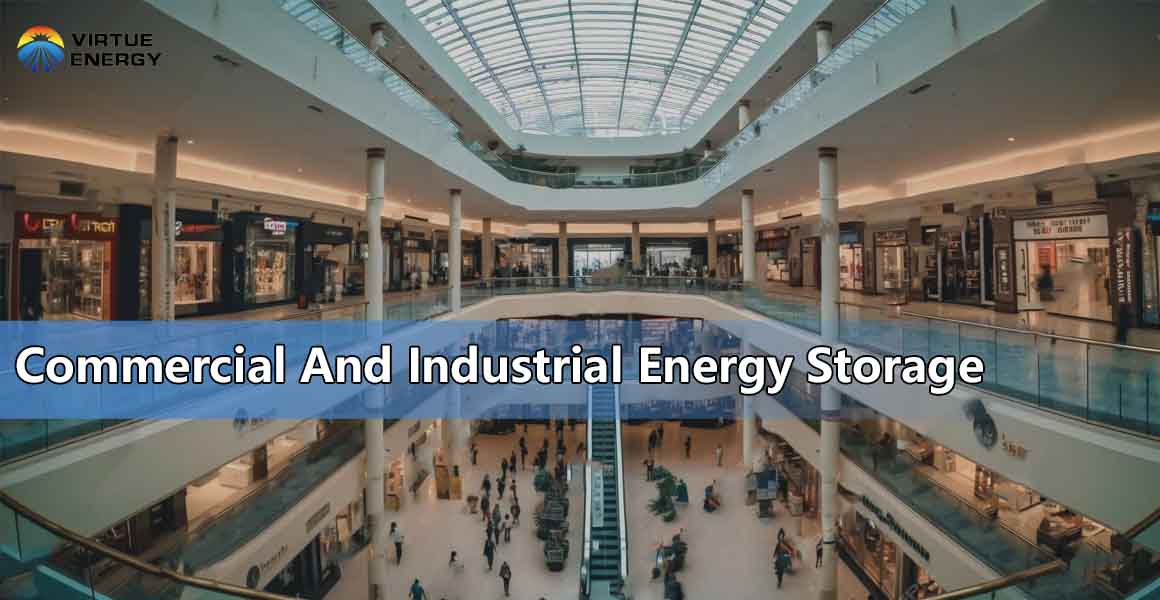
Industrial and commercial energy storage is currently using the core program is shifting from 100Ah to 280Ah. And the system requires the cell with over 6,000 cycles, which is suitable for industrial and commercial scenarios that require a long period of continuous operation. Commercial and industrial energy storage battery technology is also undergoing iteration and change. For example, BYD released a 420Ah long blade battery for commercial and industrial energy storage solutions, and SVOLT released 124Ah short blade battery cell for commercial and industrial energy storage solutions. Blade batteries are new product solutions for energy storage systems.
Lithium battery storage system can provide rapid frequency regulation, voltage regulation and other grid auxiliary services to enhance grid stability and power supply reliability. For industrial and commercial places that require continuous and stable power supply, like hospitals, data centers, and other applications, the energy storage systems can be used as a backup power, which can be quickly switched when the main power grid fails to ensure uninterrupted operation of the important loads. In addition, we can produce OEM lithium battery according to your actual application scenarios to meet your requirements. If you need, please contact us!
Bulk Energy Storage
With the increasing scale of energy storage power stations, the advantages of battery cells in energy storage applications are obvious. Compared with 50Ah or 100Ah, 280Ah and above high-capacity batteries have higher volumetric energy density. Moreover, it uses fewer parts at the PACK port, which can significantly save cost investment. In terms of manufacturing, the increased capacity can effectively simplify the subsequent integration and assembly process, which can effectively save equipment, energy consumption and manpower.
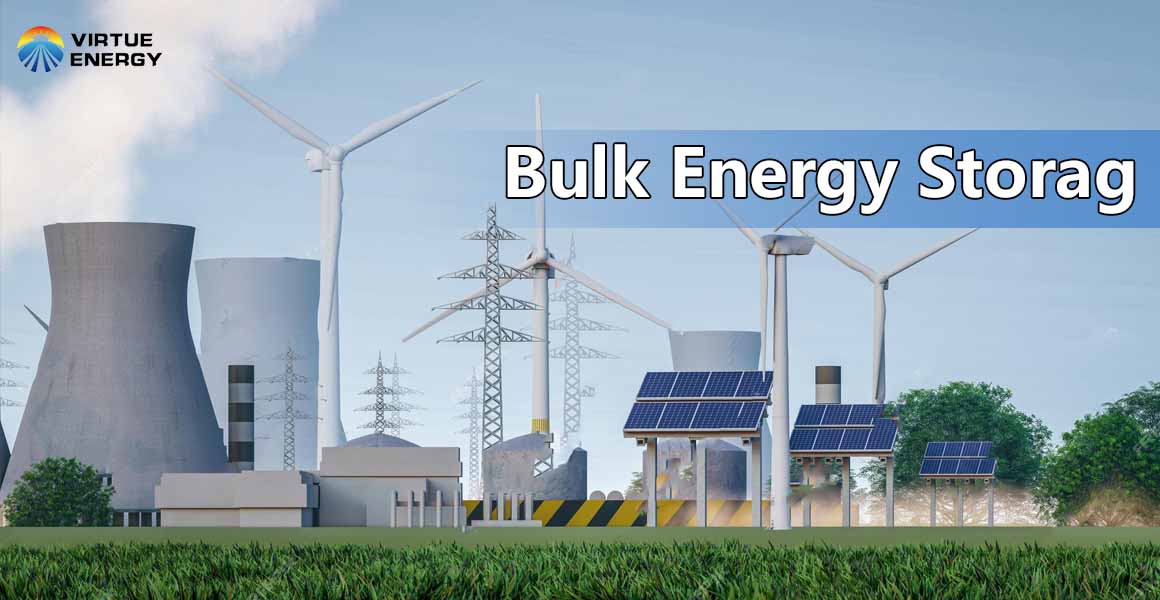
At present, large-scale energy storage power stations mainly use 280Ah battery cell, the earliest launch of the cell is CATL, and then the major manufacturers have launched higher-capacity products. Therefore, after the upgrade of large core technology, the cost will have a little decline, coupled with other manufacturers of production capacity is expanding, excluding the impact of raw material prices, lithium battery costs will be significantly reduced in the future.
Gradually increase the energy density will be the future development trend of lithium iron phosphate battery. Now through the electrochemical prelithiation, silicon carbon anode and other technological improvements, the energy density of lithium iron phosphate batteries can break through 200Wh/kg, the volume of the battery monomer to the system into a group efficiency increased from 40% to 60%.
Lithium battery technology is expanding in the field of energy storage such as household, industrial and commercial and large-scale energy storage power station, which has a wide range of application prospects and huge potential market. Lithium battery technology needs to continue technical innovation, improve safety, improve the industrial chain, and actively respond to market changes, in order to further develop in the field of energy storage.


